NIH abruptly places outspoken Trump critic on leave
A vocal critic of Trump administration actions at the National Institutes of Health was abruptly placed on administrative leave this week.
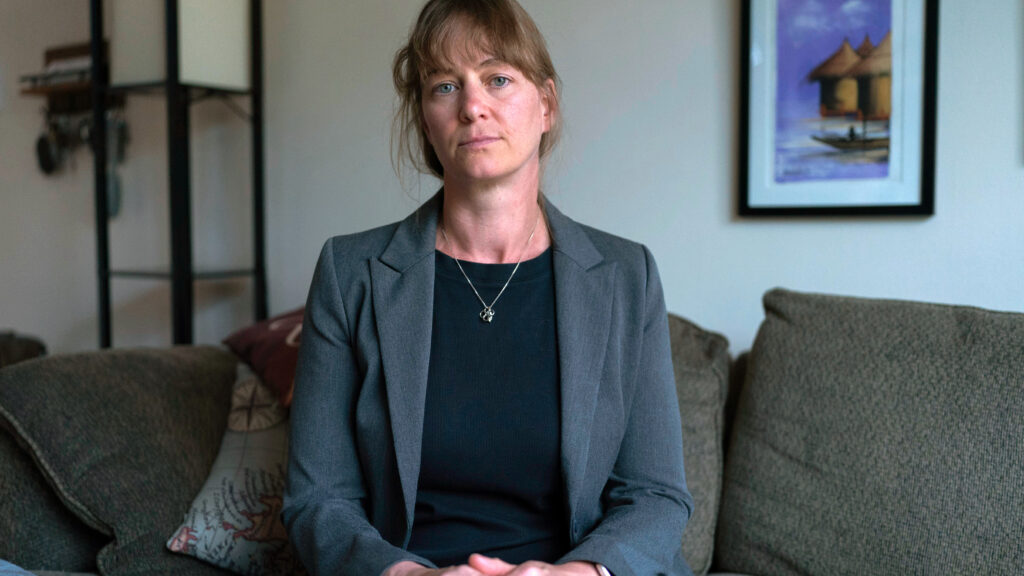
Jenna Norton, a program official at the National Institute of Diabetes and Digestive and Kidney Disease, was told Thursday she was being immediately placed on administrative leave with full pay. The email notifying her of the move, which she shared with STAT, did not provide a rationale for the decision.
“Effective November 13, 2025 at 2:00 PM EST, you will be placed on administrative leave with full pay and benefits. This administrative leave is not being done for any disciplinary purpose,” read the unsigned email sent to Norton Tuesday at 2:03 p.m. by the NIH human resources office. Her email access was also cut off.
A Department of Health and Human Services official familiar with the matter told STAT Norton was placed on leave because “Instead of focusing on her actual job to promote gold standard science, radical leftist Jenna Norton chooses to constantly criticize this administration, even when she is supposed to be working.” The official declined to be named because they are not authorized to discuss personnel matters.
“It’s not surprising. I am feeling a weird mix of sad and angry and maybe a little bit relieved, because it’s a pretty toxic place to work at the moment, but mostly just more determined than ever to speak up,” Norton said in an interview. “When they put people who are speaking up on leave, it is intended as a threat, intended to make people go silent. I think we need to do the opposite.”
Norton’s dismissal was first reported by the New York Times.

Norton has been at the center of organizing opposition to the Trump administration’s actions. At NIH director Jay Bhattacharya’s first agency townhall, Norton stood up to ask why grants measuring redlining’s impact on health were being terminated despite him calling such work a “legitimate kind of study.” She was also one of the organizers of the “Bethesda Declaration,” a letter of protest addressed to Bhattacharya and signed by over 300 agency staffers.
After the letter’s publication, Bhattacharya did not retaliate against the letter’s signers, saying “respectful dissent in science is productive.” He also met with many of the signers of the declaration in July, but Norton was not invited to the meeting.
In a Senate hearing the day after the letter was sent, Patty Murray (D-Wash.) told Bhattacharya, “I really hope you heed their warning and it should go without saying but I expect none of them to face retaliation for raising those concerns.” Bhattacharya did not respond to that concern.
Other signers who have been publicly critical of the administration have not been placed on leave, multiple sources said.
At NIDDK, much of Norton’s portfolio was focused on health disparities research, which has been thrown into disarray because of grant terminations, changes to the language researchers can use in grant applications, and uncertainty about future funding opportunities.
Thursday was the first day NIH staffers returned to the office, following the government shutdown. At a meeting around midday, Norton encouraged her colleagues to be more outspoken about the changes being made by the Trump administration in their personal capacity, she said.
“I gave this very impassioned speech about the administration not respecting our rights, but that if we gave them up in advance, then they’re gone. I basically told all my colleagues that I expected to be fired, and then I was fired two hours later,” she said.
It is unclear how long Norton’s leave will last, and if she will ultimately be fired from the agency or taken off administrative leave. Two leaders at the NIH, Jeanne Marrazzo and Kathleen Neuzil, were placed on administrative leave for months after expressing concerns over the agency’s termination of grants and increasing involvement by political appointees, according to whistleblower reports they filed. Neuzil eventually resigned, and Marrazzo was fired.
Norton is not optimistic she will be able to return to her role as a program officer, reviewing grants. “I was committed to staying at NIH as long as I could fight from within NIH and that was the reason I was staying at this point. We weren’t doing science anymore, I did not feel that the work I was able to do there was really contributing much,” she said. “It all sort of felt pointless, because it felt like it could be stopped or the rug could be pulled out from under you.”
medical
Pendidikan
Pendidikan
Download Anime
Berita Teknologi
Seputar Teknologi