Panic is getting ahead of evidence on Russian ‘plague’ story
Welcome to the debut of ID Consult, a new STAT column from infectious disease physician Krutika Kuppalli about diseases, outbreak response, global health, and health policy.
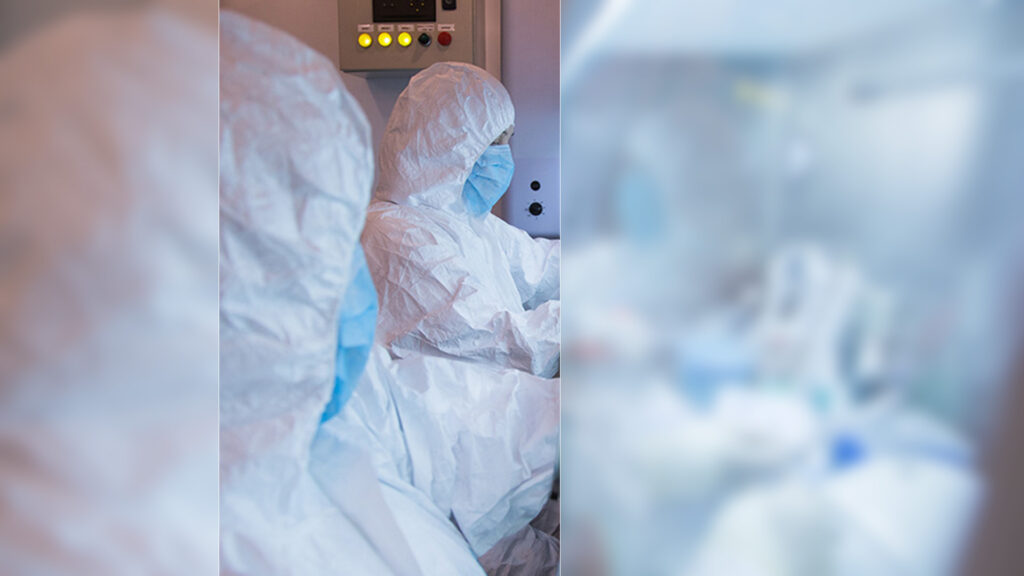
A 28-year-old laboratory worker in Siberia develops severe pneumonia and dies. She worked at an institute that studies plague and other high consequence infectious diseases. At least one hospital is placed under quarantine with close to 200 contacts reportedly being monitored. Simultaneously Russian public health officials descend on the region.
It is not difficult to understand why this story has received attention. After everything we have lived through over the past several years, an unexplained pneumonia in someone who worked at a laboratory studying dangerous pathogens can quickly lead to speculation about a laboratory accident, biological weapons, or “the next Covid-19.”
But we need to slow down.
There are important reasons to pay close attention to what is happening in Russia. There are also legitimate reasons to ask difficult questions about transparency, laboratory safety, and Russia’s history of biological weapons research. None of those things means we should jump ahead of the evidence.
Based on the information currently available, there is no confirmation that this woman died from plague, despite widespread speculation, nor is it clear her illness was connected to her work. Nothing reported thus far suggests sustained person-to-person transmission.
Most importantly, there is no evidence that we are witnessing the beginning of another pandemic.
What we have is an unexplained death that deserves a thorough and transparent investigation.
According to reports, Daria Shipilova worked at the Irkutsk Anti-Plague Research Institute of Siberia and the Far East, an institution involved in research of plague, anthrax, tularemia, and other high-consequence infectious diseases. She was hospitalized on Sept. 29 with severe pneumonia and died approximately two days later. Early news stories suggested that Shipilova may have had pneumonic plague, but Russian authorities have described her illness as pneumonia of unknown etiology and said that testing has not identified a pathogen associated with her work.
Public health officials have undertaken an extensive response. At least one hospital has reportedly been quarantined, contacts have been identified and monitored, and senior public health officials have been sent to the region. Covid-19 and rhinovirus have been identified in a small number of contacts tested.
This picture is broadly consistent with the latest assessment from the World Health Organization, which said Russia has reported no confirmed cases of plague in Irkutsk and no evidence of further infections among the contacts being monitoring. The WHO has requested further information to clarify the cause of Shipilova’s severe pneumonia, the pathogen that prompted the public health measures, and whether a second employee also has pneumonia of undetermined cause, as media reports suggest.
The absence of confirmed plague or documented transmission is reassuring, but uncertainties remain. In particular, the cause of Shipilova’s illness has not been established publicly, and reports of a second employee with unexplained pneumonia require clarification. The combination of limited information, conflicting reports, and a unusually extensive public health response naturally raises questions. At the same time, suspicion is not confirmation, and monitoring contacts does not mean they are infected. Most importantly, a “pneumonia of unknown etiology” is not synonymous with the emergence of a new pathogen. It simply means that we do not yet know what caused the pneumonia.
Could this be plague? Yes — it remains a possibility that warrants careful investigation, particularly given where she worked. However, even if pneumonic plague is ultimately confirmed, that does not mean we are facing the “next Covid-19.”
Plague is caused by Yersinia pestis, a bacterium that has caused infection in humans for thousands of years. Pneumonic plague is serious because it affects the lungs and can spread from person to person though respiratory droplets. Without prompt treatment, it can progress rapidly and lead to death.
The reassuring news is that plague is not an unknown threat. We know how to diagnose it, and we have effective antibiotics to treat it. We also know how to identify and monitor contacts, provide post-exposure prophylaxis, isolate patients, and implement infection prevention and control measures to interrupt transmission. That is fundamentally different from the situation we faced when SARS-CoV-2 emerged, when we were confronting a novel pathogen with limited knowledge about its transmission, clinical course, or how best to prevent and treat infection. There is an important distinction between encountering a new pathogen and responding to a disease we have studied for more than a century.
The epidemiology of plague also differs substantially from that of SARS-CoV-2. Person-to-person transmission of pneumonic plague generally requires close exposure to respiratory particles from someone who is actively ill, and asymptomatic transmission has not been documented.
That does not make pneumonic plague benign. Rather, it means we should understand the risk based on what we know about the pathogen rather than immediately comparing it to Covid-19.
There is, however, another reason the situation in Russia deserves close attention. Russia, and before it the Soviet Union, has a well-documented history with biological weapons research.
The Soviet Union operated an extensive clandestine biological weapons program despite being a party to the Biological Weapons Convention. That program included work with pathogens capable of causing some of the world’s most dangerous outbreaks, including Yersinia pestis.
There is also well-documented historical evidence of an accidental release from the Soviet biological weapons program.
In 1979, an accidental release of aerosolized Bacillus anthracis spores from a military biological facility in Sverdlovsk caused an outbreak of inhalational anthrax that killed at least 66 people. Soviet authorities blamed contaminated meat.
Years later, investigators reconstructed the outbreak and found that human cases and livestock deaths followed a narrow zone extending downwind from the military facility. Their investigation, published in Science in 1994, provided compelling evidence that the outbreak resulted from an airborne release.
What does any of this mean for today?
It does not mean the current situation is connected to a biological weapons program. There is no evidence at this point to support that conclusion. A laboratory exposure, an accidental release, and a biological weapons program are separate claims, and each requires its own evidence.
Nevertheless, this history matters and provides a legitimate reason to demand transparency and independent verification.
Sverdlovsk is a particularly important lesson. A biological event occurred. People died. The official explanation was wrong. It took years before the world understood what had happened.
That history gives us good reason to ask questions about what is happening now. The appropriate response is neither panic nor blind reassurance, but a clear demand for transparency and data.
What specimens were collected? What testing was performed? Was Yersinia pestis specifically excluded? What pathogens did this woman work with? Was there any evidence of an occupational exposure or laboratory incident? Have any contacts developed a compatible illness? What explains the scale of the quarantine?
Most importantly, will Russian authorities share enough information with international public health organizations and independent experts to allow their conclusions to be evaluated?
We may eventually get a straightforward explanation or we may never know.
The uncertainty is uncomfortable, but uncertainty is a routine part of outbreak response. Since Covid-19, we seem to be particularly bad at tolerating it. An unusual infectious disease event occurs somewhere in the world. Information is scarce. Within hours, social media fills the gaps. Suddenly it is “Disease X,” a laboratory leak, or “the next pandemic.”
That is not preparedness. Preparedness is detecting unusual events early, investigating them quickly, sharing information transparently, and having the expertise and infrastructure to determine whether a signal represents an isolated event or something more serious.
There is a difference between vigilance and alarmism. But it is important to recognize that at a time when we need strong systems capable of detecting biological threats around the world, the United States is weakening parts of its own public health and scientific infrastructure.
Public health surveillance is not just about counting cases. It is part of national and global security. Laboratory networks, genomic surveillance, epidemiologists, infectious diseases experts, international partnerships, and relationships with scientists and public health officials in other countries all help us recognize when something unusual is happening.
Weakening those systems does not make biological threats disappear. It makes us less capable of seeing and understanding them. It also makes us more dependent on information provided by governments whose conclusions we may need to independently evaluate.
This should concern us far more than speculation on social media about whether an unexplained pneumonia is “the next Covid-19.”
There are developments that would change my assessment of the situation in Russia. Confirmation of Yersinia pestis or another high-consequence pathogen would be important. Additional unexplained pneumonia cases among contacts would matter. Evidence of person-to-person transmission, cases outside the immediate contact network, or credible evidence of a laboratory exposure would all raise the level of concern.
We do not have evidence of those things right now.
One of the most important things we can say in an outbreak investigation is also one of the hardest: “We don’t know yet.”
For now, we need more information from Russia. Until we have it, we should ask questions, follow the evidence, and resist the temptation to fill in what we do not know with what we fear.
Krutika Kuppalli, M.D., is an infectious diseases physician and former World Health Organization medical officer whose work has focused on vaccines, emerging infectious diseases, and outbreak preparedness and response. She served as medical director of an Ebola treatment unit in Sierra Leone during the 2014–2016 West Africa Ebola epidemic and has supported outbreak and vaccine efforts in Africa and globally.
PakarPBN
A Private Blog Network (PBN) is a collection of websites that are controlled by a single individual or organization and used primarily to build backlinks to a “money site” in order to influence its ranking in search engines such as Google. The core idea behind a PBN is based on the importance of backlinks in Google’s ranking algorithm. Since Google views backlinks as signals of authority and trust, some website owners attempt to artificially create these signals through a controlled network of sites.
In a typical PBN setup, the owner acquires expired or aged domains that already have existing authority, backlinks, and history. These domains are rebuilt with new content and hosted separately, often using different IP addresses, hosting providers, themes, and ownership details to make them appear unrelated. Within the content published on these sites, links are strategically placed that point to the main website the owner wants to rank higher. By doing this, the owner attempts to pass link equity (also known as “link juice”) from the PBN sites to the target website.
The purpose of a PBN is to give the impression that the target website is naturally earning links from multiple independent sources. If done effectively, this can temporarily improve keyword rankings, increase organic visibility, and drive more traffic from search results.
Streaming Film
Nonton Film gratis
Jasa Backlink
Download Anime Batch