Microplastics have become a rare source of bipartisan agreement
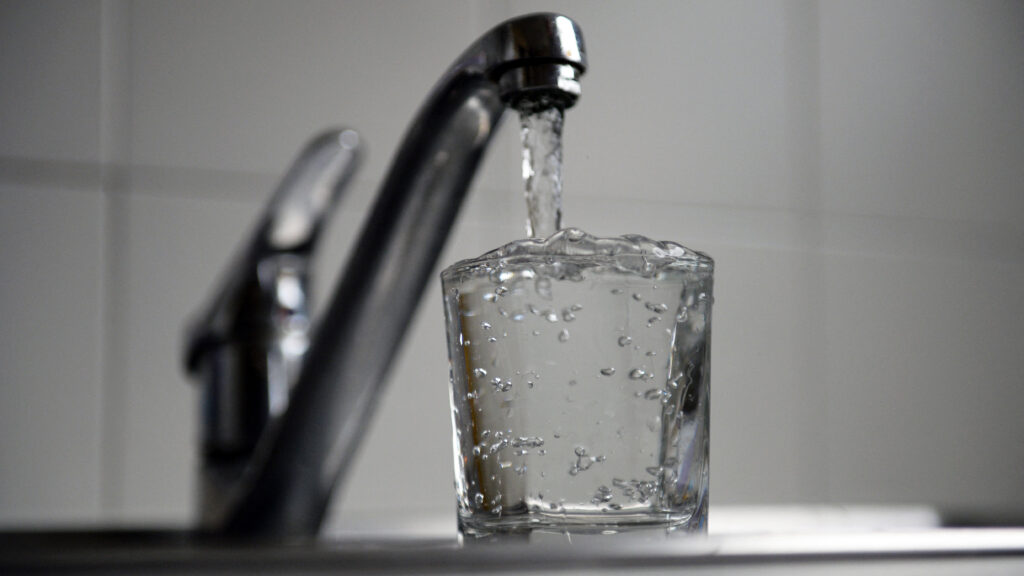
This month, the Trump administration announced what may be the biggest win for the Make America Healthy Again movement on an environmental issue to date. The Environmental Protection Agency proposed a rule that would, for the first time, formally flag microplastics and pharmaceuticals in drinking water as threats that deserve federal attention — putting them on its list of contaminants that merit study, tracking, and possible future regulation. The Department of Health and Human Services also announced a $144 million ARPA-H program to standardize how microplastics are measured in the human body, study how they may cause harm, and explore ways to reduce them.
But there’s reason for skepticism. The announcement doesn’t set a new legal limit for microplastics in drinking water, and it doesn’t require utilities to remove them. Even if the rule is finalized, the EPA would still have to take more steps before Americans see binding legal changes.
This could be the start of serious action on microplastics. Or it could end up as a headline — designed to woo MAHA voters — with little behind it.
This move comes after MAHA activists warned President Trump he could lose their support over the administration’s recent executive order boosting domestic glyphosate production as well as efforts to shield pesticide manufacturers from legal liability. It also follows the EPA decision not to move forward on regulating any new contaminant from the previous drinking-water priority list. On PFAS, the administration kept limits for only two chemicals while moving to roll back or reconsider action for others. And in the global plastics treaty talks, it sided with corporate polluters in rejecting caps on plastic production and restrictions on plastic additives. All this suggests the Trump administration is unlikely to seriously confront the plastics problem.
Still, even if little comes of this new announcement, it may signal something important: It’s no longer just progressives and environmentalists who care about toxic petrochemicals. There are now real constituencies from left to right. In recent polling and focus groups we conducted with YouGov, microplastics and other toxins repeatedly surfaced as top concerns among right-of-center voters — not mainly as an abstract environmental issue, but as a question of children’s health, fertility, and chronic disease.
A 2025 autopsy study reported roughly 7 grams of microplastics and nanoplastics in analyzed human brain samples — about the weight of a plastic spoon. Microplastics have also been found in human blood, placentas, lungs, and arterial plaque. Scientists are still working to understand all the ways these particles affect human health. But it’s already well established that chemicals commonly used in plastics and packaging, including phthalates, bisphenols, and PFAS, can disrupt hormones and have links to fertility problems, fetal-development harms, metabolic disease, and some cancers.
The science is still developing, but it’s getting more clinically specific. A new Nature Reviews Gastroenterology & Hepatology perspective contends that microplastics and nanoplastics now deserve serious attention as a liver-health issue, citing accumulation in human liver tissue and preclinical evidence of oxidative stress, inflammation, and fibrogenesis. The field still has gaps. But there’s now clear evidence that the plastics issue has serious implications for public health.
Pressure from MAHA activists is what put plastics on the administration’s agenda. But pronatalists and social conservatives are also increasingly concerned about fertility and falling birth rates attributed to plastic pollution. “The Plastic Detox,” a controversial but popular new Netflix documentary, follows six couples with unexplained infertility as they try to reduce plastic exposure under the guidance of epidemiologist Shanna Swan. The issue is moving beyond niche environmental circles and into mainstream public concern that crosses culture-war boundaries.
The emerging cross-partisan consensus on plastics offers a rare opportunity to push for a real policy agenda.
First, the administration should finalize this EPA action and back it with real investment in monitoring, toxicology, exposure science, and independent health research, so regulators and water systems have better data on what is in the water and what it may be doing to people.
Democrats should not dismiss the new EPA initiative just because it came from the current administration. Instead, they should challenge Republicans to actually follow through.
But cleanup alone isn’t enough. A real plastics agenda has to do two things at once: reduce the harm people face right now, and reduce the growth of plastic production and pollution over time.
Government should help build the market for safer alternatives to plastics through research grants, pilot projects, procurement standards, and tax incentives for packaging and food-service alternatives that are proven to be less toxic. Those investments should focus not only on replacement materials, but also on reuse systems and product redesign that reduce plastic use in the first place.
Policymakers should also require manufacturers to disclose additives and realistic leaching data for food-contact materials, cookware, bottled water, and children’s products. Governments should help schools move away from single-use plastics that touch hot food, through public funding to help districts shift to safer trays, reusable serviceware, and dishwashing capacity.
If we want real progress on plastics, companies need both a stick and a carrot. Businesses that hide risks or keep using harmful chemicals should face more scrutiny and stronger rules. And businesses that develop safer materials, better packaging, and reusable systems should get support through procurement, research funding, and other incentives.
Ultimately, we need a global plastics treaty: no administration can claim to defend people from microplastics while undermining efforts to curb plastic production on a global basis.
Despite the conventional thinking, progress on environmental health issues is possible right now. Given who holds power in Washington, the key is to focus rhetoric less on the big vision of global sustainability than on the simple defense of personal bodily health, including especially the health of kids.
But the fact is: Passing a serious agenda on plastics would do massive good for the natural world as well as for public health.
The right response to the Trump administration’s new announcement isn’t to cheer and move on. It’s to make the administration prove it means what it says, and then use this opening to build the plastics policy we actually need.
Tim Ryan is a former 10-term Democratic member of the U.S. Congress from Ohio. Justin Talbot Zorn is a senior adviser at the Center for Economic and Policy Research.
PakarPBN
A Private Blog Network (PBN) is a collection of websites that are controlled by a single individual or organization and used primarily to build backlinks to a “money site” in order to influence its ranking in search engines such as Google. The core idea behind a PBN is based on the importance of backlinks in Google’s ranking algorithm. Since Google views backlinks as signals of authority and trust, some website owners attempt to artificially create these signals through a controlled network of sites.
In a typical PBN setup, the owner acquires expired or aged domains that already have existing authority, backlinks, and history. These domains are rebuilt with new content and hosted separately, often using different IP addresses, hosting providers, themes, and ownership details to make them appear unrelated. Within the content published on these sites, links are strategically placed that point to the main website the owner wants to rank higher. By doing this, the owner attempts to pass link equity (also known as “link juice”) from the PBN sites to the target website.
The purpose of a PBN is to give the impression that the target website is naturally earning links from multiple independent sources. If done effectively, this can temporarily improve keyword rankings, increase organic visibility, and drive more traffic from search results.